Part 2 records stay behind consent.
Calm checks signed consent for disclosure, logs access, and keeps Part 2 records fetched from the server in browser memory only.
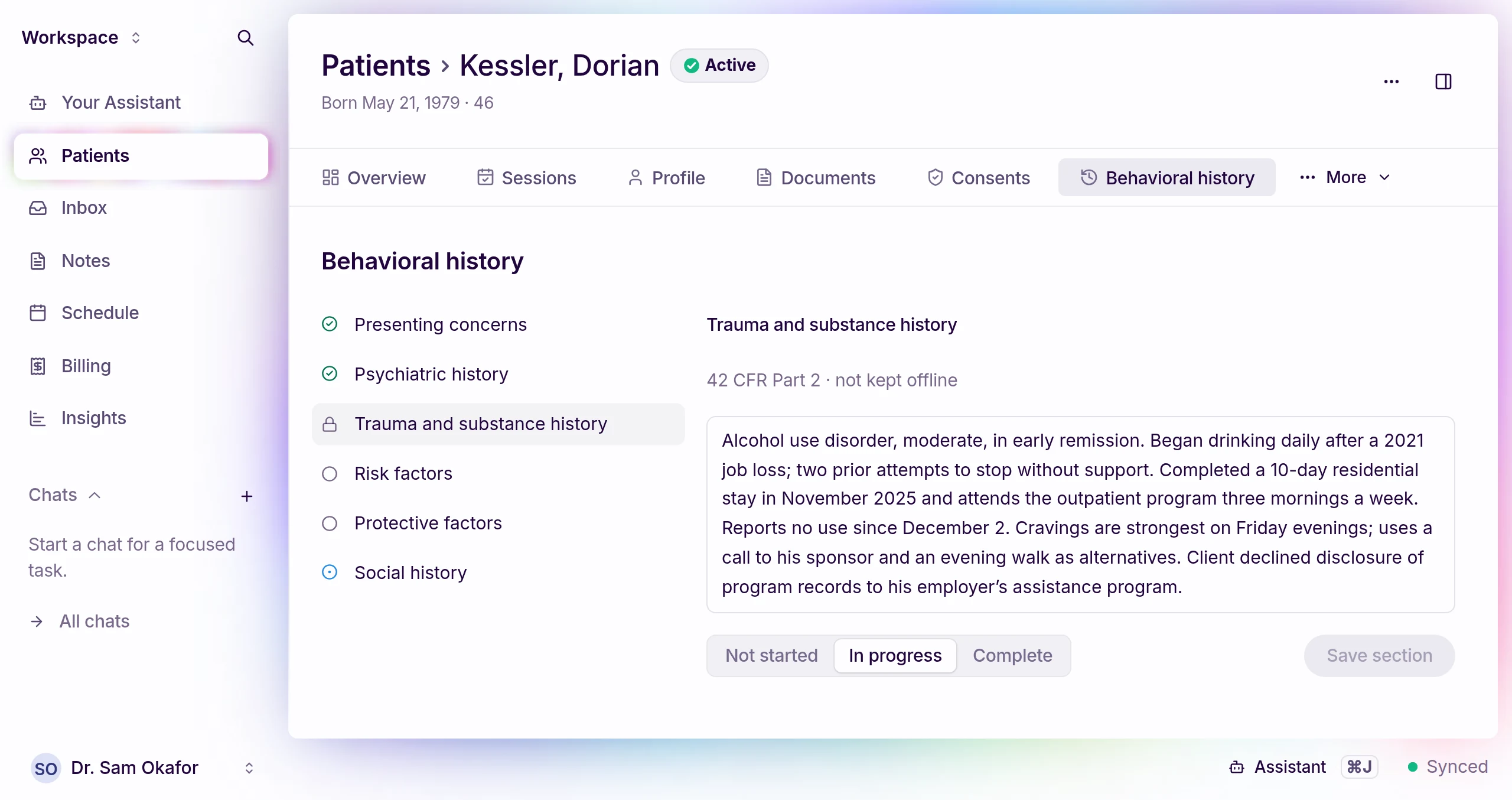
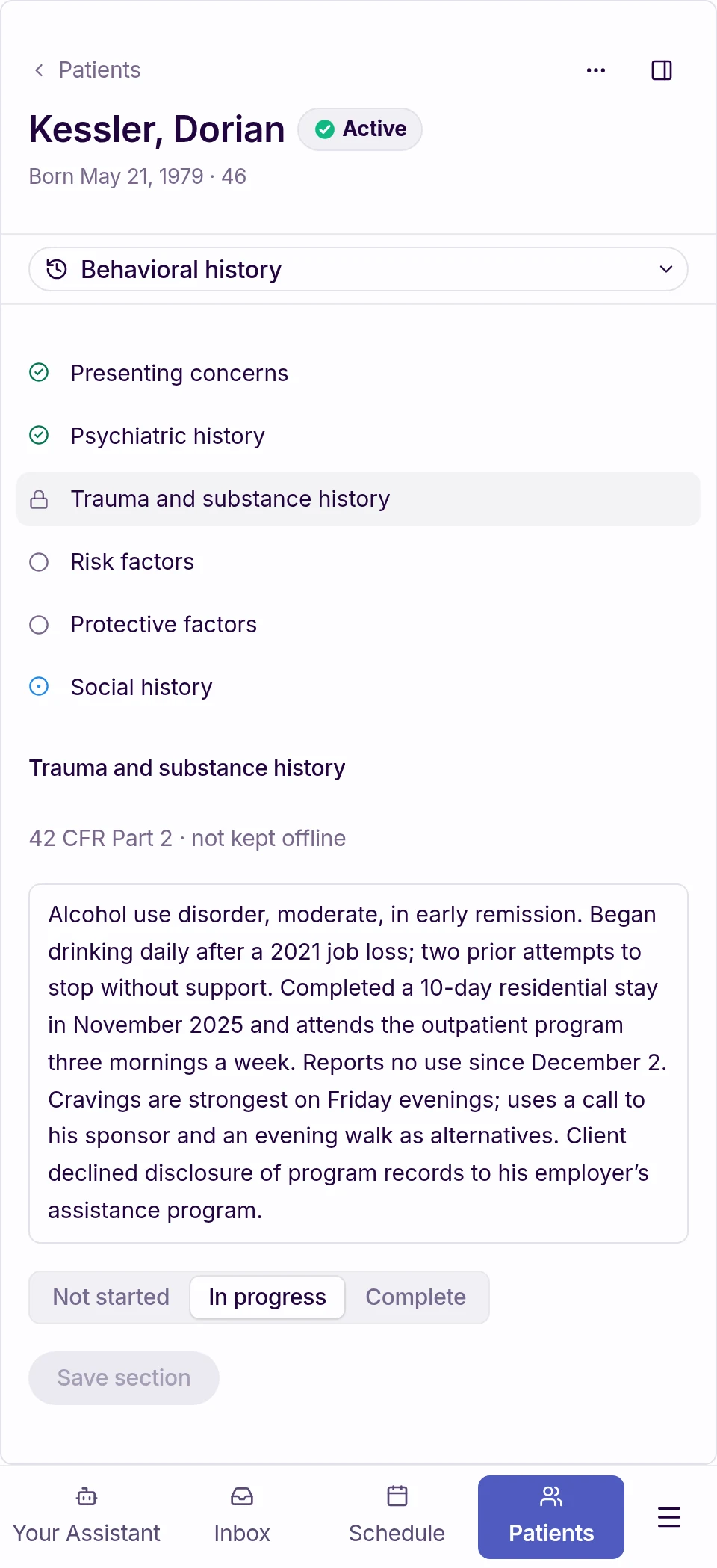
Three layers of 42 CFR Part 2 isolation.
See how Calm checks consent, handles records opened from the server, and logs disclosures.
Signed consent gate
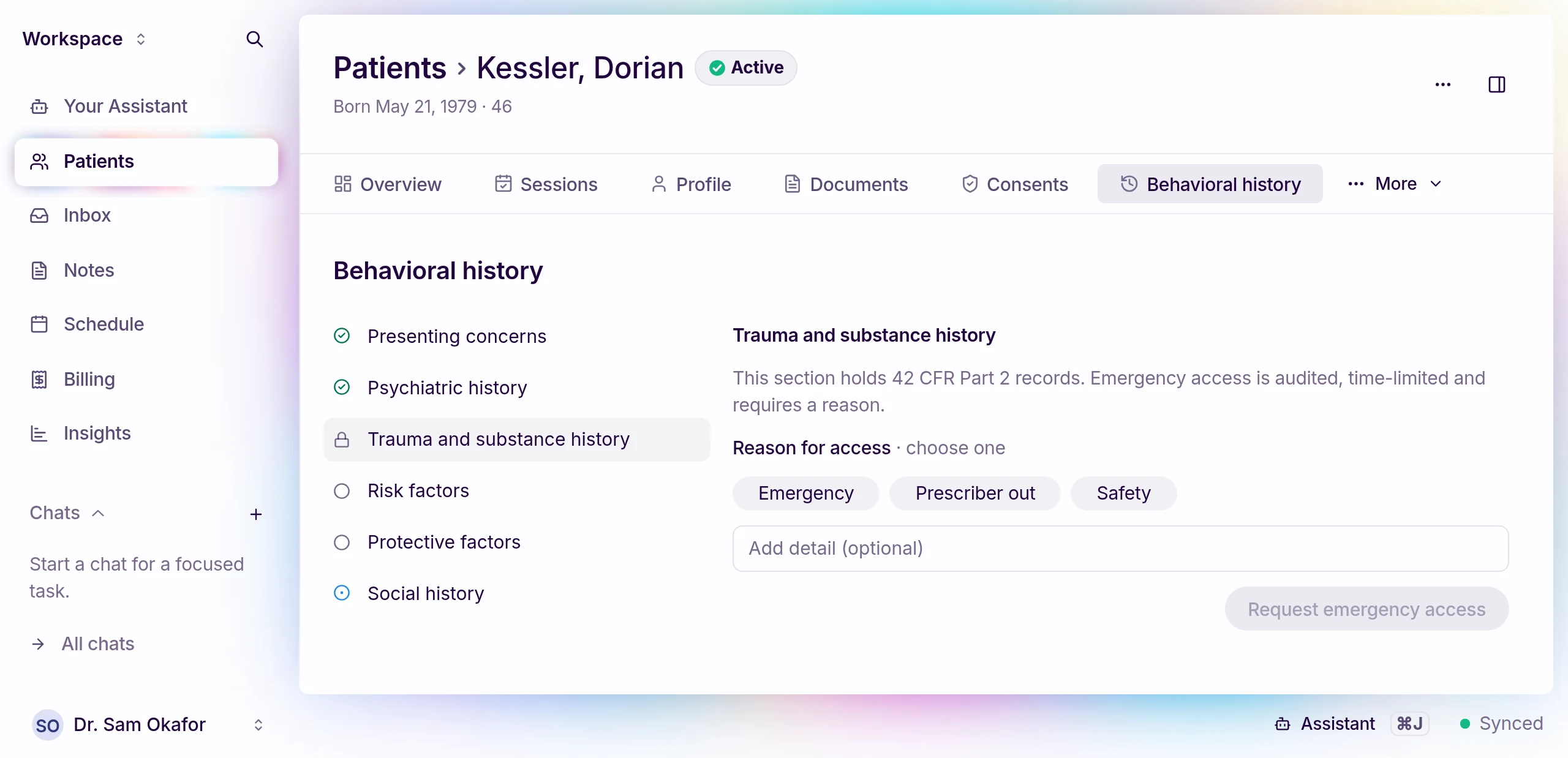
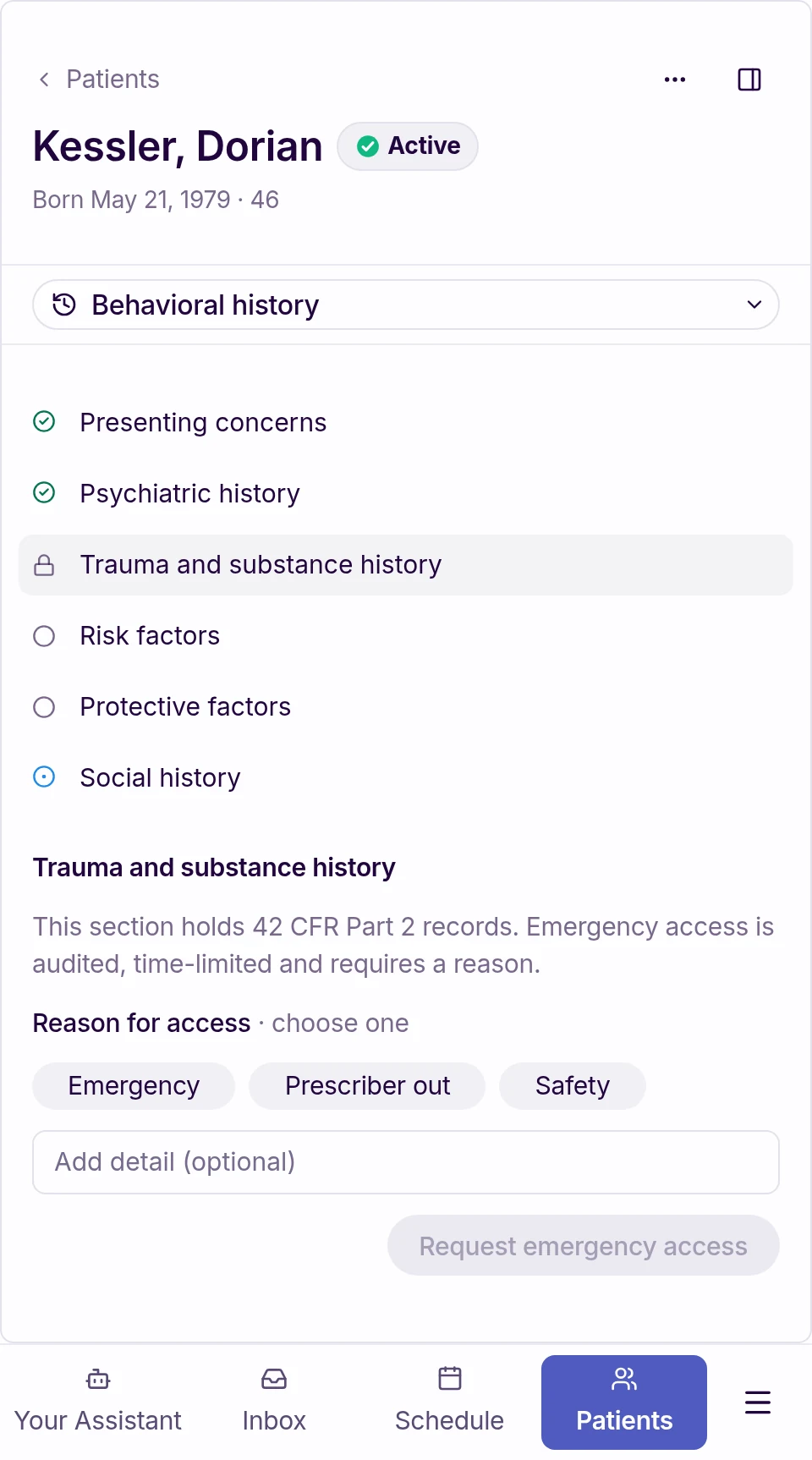
Disclosing a 42 CFR Part 2 section requires signed client consent recorded in the chart. Unauthorized staff see a locked gate rather than content.
Opening protected records
When a clinician opens a Part 2 record or psychotherapy note, the browser fetches it from the server and holds that copy in memory only.
Immutable disclosure & revocation audit
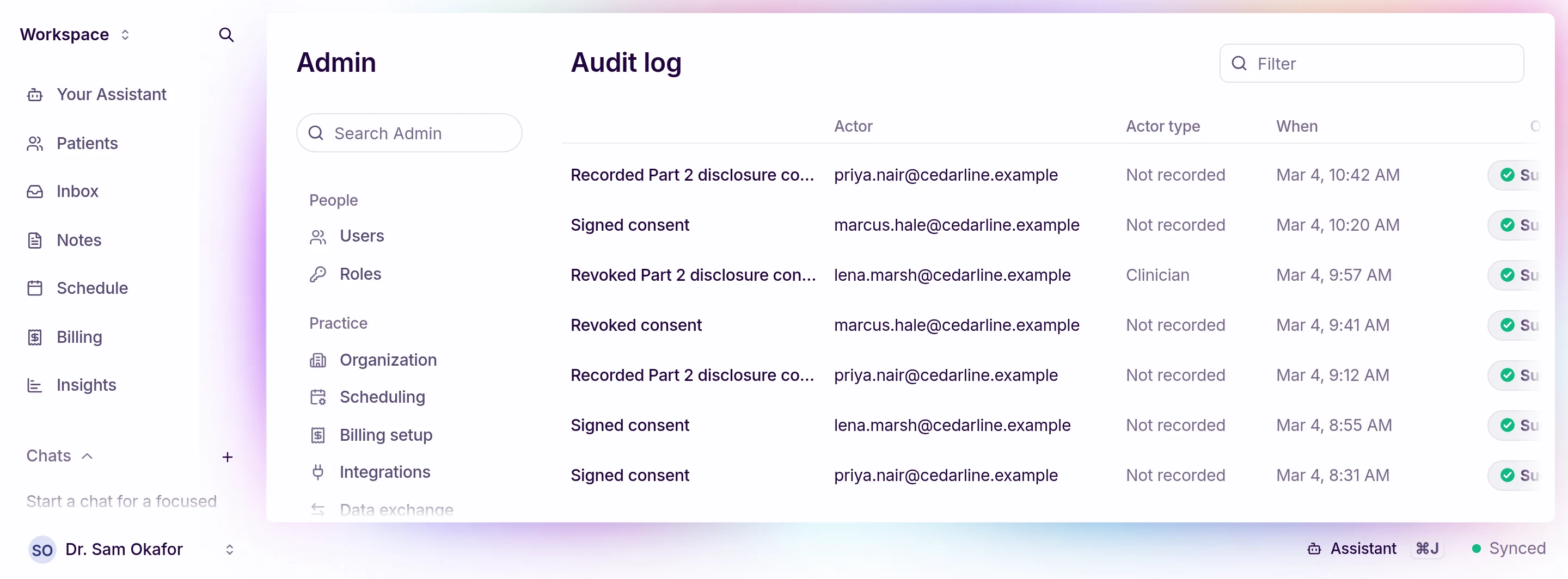
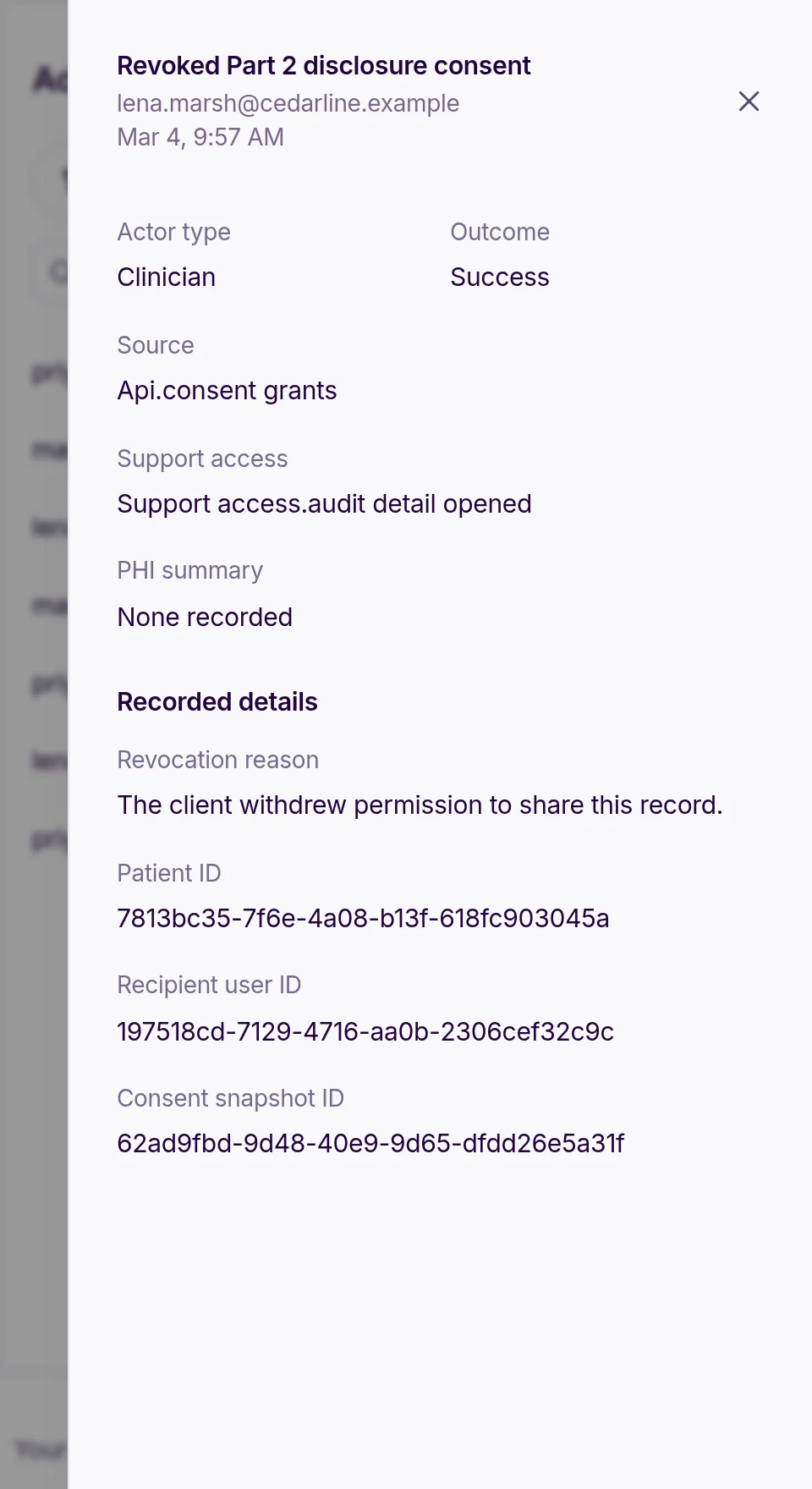
Every consent signing, revocation, emergency break-glass request, and read event lands in the compliance audit log with actor, reason, and timestamp.
Stricter records, handled as stricter records.
How does Calm handle consent for Part 2 records?
Disclosing a 42 CFR Part 2 record requires signed client consent recorded in the chart, with every consent event audited.
Sensitive recordsDoes the browser store sensitive records on this device?
The browser keeps server-fetched Part 2 records and psychotherapy notes in memory only. A clinician’s own unsaved edits can be recovered from an encrypted draft.
Who can open a psychotherapy note?
Opening a psychotherapy note requires a time-bound grant, separate from general chart access.
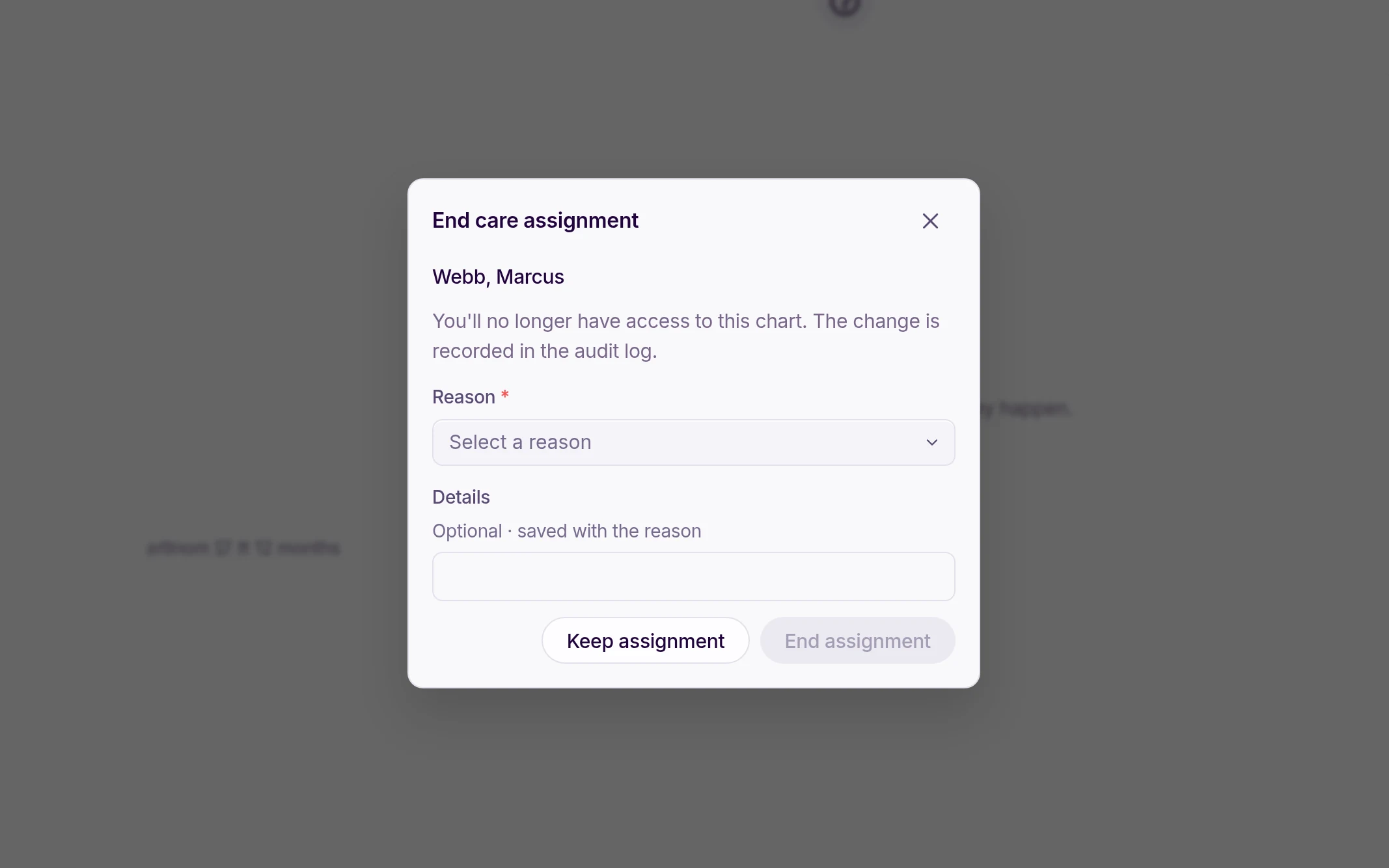
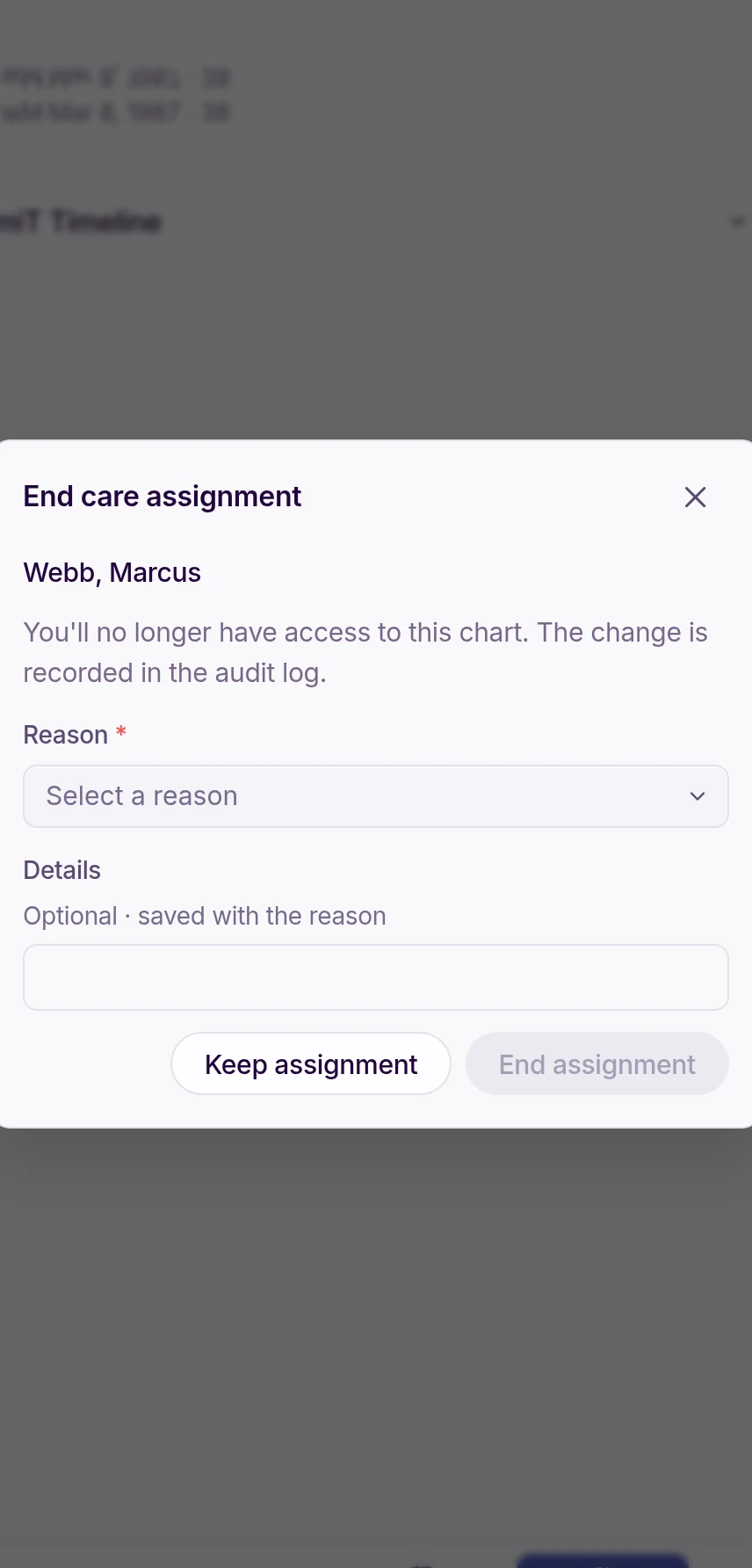
What changes when a care assignment ends?
Ending a care assignment removes the chart access it granted. The audit trail records the reason.
Closed without access.
Part 2 sections stay locked to unauthorized staff. Emergency access is time-limited, reasoned, and audited.
Consent events in the audit log.
Consent signings, revocations, and Part 2 disclosures appear in the audit log for compliance review.
Care assignments end cleanly.
End the assignment to remove its access grant and record the reason.
Treatment records with real guardrails.
Request a compliance walkthrough for your substance use program and review our BAA and Part 2 controls.